MK4 的高流量 PETG 参数档:核心是别过挤出
在标定良好的机器上,PETG 最常见的问题是人们拿 PLA 的倍率来打它。结果是过挤出、零件涨大、外壁搭接处起棱。这套参数围绕 0.96 的挤出倍率、140 mm/s 的填充速度,以及一个能让喷嘴不再蹭顶面的 Z 抬升来搭。
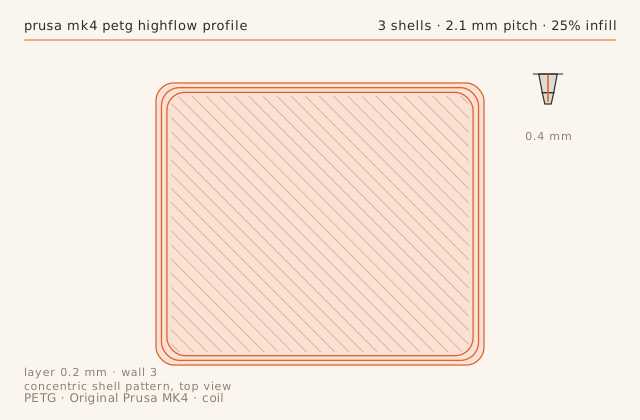
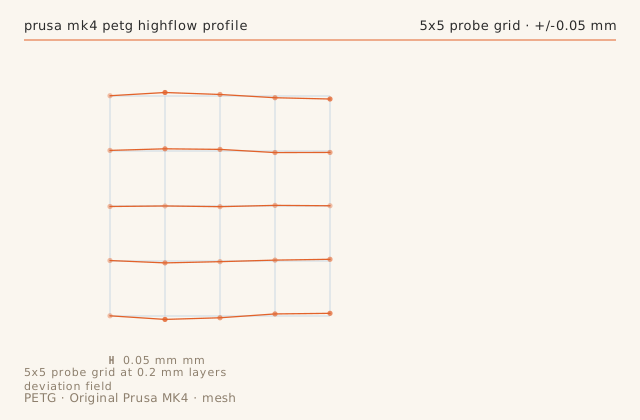
切片图按这条记录自己的切片参数画出来的。
打印记录
- 材料
- PETG
- 喷嘴
- 0.4 mm
- 层高
- 0.2 mm
- 墙数
- 3
- 填充
- 25%
- 打印时长
- 1 小时 36 分
- 发布于
- 2026 年 10 月 22 日
先从「不足」这一侧开始试
在这台机器上,1.00 倍率打出的壁厚是 0.45 mm,目标是 0.42 mm,50 mm 方块涨到 50.21 mm。0.96 时壁厚 0.41 mm,方块 50.06 mm。PETG 熔体黏度更高,被侧向挤出去的量更少,所以「标称」倍率在它身上表现得像过挤出。
判断依据是顶面外壁搭接处的凸棱:PETG 被多挤出来的那部分没有地方可去,只能顺着外壁往上堆。如果看到这个,先降倍率,别先动温度,因为降温只会让表面变花而不会让凸棱消失。
PETG 上 Z 抬升不是可选项
PETG 会蹭。不抬 Z,喷嘴每次行程都会从上一层顶面拖过去留下痕迹。0.2 mm 时拖痕减少但没消失;0.4 mm 完全消除;到 0.6 mm 反而因为行程变长开始拉丝,白花时间。
Z 抬升必须配合回抽时的擦拭。只抬 Z 不擦拭,等于把还挂着熔融尾巴的喷嘴抬起来而已。
床温决定件是粘住还是焊死
75 C 时较长的件首层附着力不足。90 C 时首层被压出象脚,底部宽到第四次打印时整件焊在板上了。85 C 连续十次稳定。模型首层加 0.4 mm 倒角,把残留的那点象脚也去掉了。
象脚和附着力是同一个变量的两面:床越热,第一层越粘得住,也越容易被压平外扩。用床温和倒角来解决,不要靠压低首层挤压量,那样做只会让附着先垮掉,而象脚依然存在。
什么能跑快,什么不能
填充和实体填充在这台机器上跑 140 和 100 mm/s 没有可见代价。外壁超过约 100 mm/s 熔体就跟不上、表面变花,70 mm/s 是一个 96 分钟件上表现最好的值。
0.4 mm 喷嘴下 140 mm/s 对应的 11 mm3/s 体积上限才是瓶颈。硬往上提,填充会欠挤出,而你要等到件断掉才会发现。
失败链出了什么问题、当时怎么处理、最后是什么结果。
-
第几步 01
症状
First layer was glassy but the part released on its own during the fourth print.
处理
Bed at 90 C caused elephant-footing, and the squished base had actually bonded. Lowered the bed to 85 C and added a 0.4 mm chamfer to the model's first layer.
结果
Adhesion is now consistent across ten prints with no release and no elephant foot.
-
第几步 02
症状
Ridges along the top surface where perimeters overlapped, and the block measured 50.21 mm.
处理
Over-extrusion. Reduced the multiplier from 1.00 to 0.96 and switched the top fill pattern to monotonic.
结果
Block measured 50.06 mm and the ridges are gone.
尺寸复核
- 特征
- 50 mm PETG test block
- 标称
- 50 mm
- 实测
- 50.06 mm+0.06
- 公差
- ± 0.08 mm
- 备注
- 0.96 multiplier was chosen to keep the block from growing; at 1.00 the same block measured 50.21 mm and the outer walls showed a slight ridge from over-extrusion.
参数扫描
| 参数 | 试过 | 选定 | 理由 |
|---|---|---|---|
| Extrusion multiplier | 0.92 / 0.94 / 0.96 / 1.00 | 0.96 | 0.96 produced a 0.41 mm wall; 1.00 produced a 0.45 mm wall with visible ridges where perimeters overlapped. |
| Nozzle temperature | 230 / 235 / 240 / 248 C | 240 C | Below 235 C the layers did not bond on 0.2 mm layers; at 248 C stringing was severe and the surface turned glossy in an uneven way. |
| Z-hop | 0.0 / 0.2 / 0.4 / 0.6 mm | 0.4 mm | PETG loves to smear. 0.2 mm still dragged on some moves; 0.6 mm added visible stringing from the extra travel. |
| Perimeter speed | 50 / 70 / 100 / 130 mm/s | 70 mm/s | Above 100 mm/s the surface went uneven because the melt could not keep up; 70 mm/s gave the best balance for a 96-minute part. |
| Bed temperature | 75 / 80 / 85 / 90 C | 85 C | 75 C lost first-layer adhesion on long parts; 90 C produced elephant-footing that needed a 0.4 mm chamfer to remove. |
切片档案
# LayerLog PETG profile v3 — Original Prusa MK4, 0.4 Nextruder nozzle
# PETG bonds to itself; keep the nozzle high and the flow slightly under
nozzle_temp: 240
nozzle_temp_first_layer: 242
bed_temp: 85
bed_temp_first_layer: 85
layer_height: 0.20
first_layer_height: 0.25
perimeters: 3
perimeter_speed: 70
infill_speed: 140
solid_infill_speed: 100
travel_speed: 280
accel: 3500
pressure_advance: 0.042
retraction: 0.8 mm at 30 mm/s, wipe on
max_volumetric_speed: 11 mm3/s
extrusion_multiplier: 0.96
seam_position: rear
z_hop: 0.4 mm on retraction
沿用下来的做法
- PETG 用 0.96 挤出倍率;1.00 会把 50 mm 方块打到 50.21 mm。
- 用 0.4 mm Z 抬升配回抽擦拭,防止喷嘴蹭花顶面。
- 85 C 床温加首层 0.4 mm 倒角,同时解决象脚和附着。
- 外壁保持 70 mm/s;填充可以跑 140 mm/s。
结论
这是 MK4 上典型 50 mm 件 96 分钟的 PETG 工作参数档。每换一卷新料都要重验 0.96 这个倍率。
同一台机器上还有 Original Prusa MK4
-
打印日志
Nextruder 冷拔:三次拉丝,和那些看着像欠挤出的麻点
壁厚正确却出现表面麻点,这大概率不是流量问题,是污染。这篇记录在 MK4 的 Nextruder 喷嘴上有效的冷拔流程、为什么温度比手法更关键,以及大多数人跳过的那一步排废。
- 材料PLA
- 喷嘴0.4 mm
- 层高0.2 mm
- 打印时长1 小时 1 分
- 失败链2
-
打印日志
MMU3 换色:排废量比参数档里其他任何东西都重要
MK4 多色打印的失败只有两种——过渡脏和拖丝——而两者都是排废与擦嘴问题,不是模型或切片问题。这篇记录一块换色 13 次的 60 mm 铭牌、最终做出干净分界的排废量,以及每次擦嘴多花的 9 秒。
- 材料PLA
- 喷嘴0.4 mm
- 层高0.2 mm
- 打印时长3 小时 56 分
- 失败链2
-
打印日志
直驱 MK4 打 TPU 95A:PLA 五十分钟的件要打三小时二十五分
直驱机器打柔性料并不难,只是慢,而且失效模式永远一样——料在齿轮和熔化区之间拱起打折。这篇记录防止它的两个设置、柔性件为什么需要刻意过挤出,以及真实的耗时。
- 材料TPU-95A
- 喷嘴0.4 mm
- 层高0.25 mm
- 打印时长3 小时 25 分
- 失败链2