Voron 2.4 上能扛住 150 mm 大件的 ASA 参数档
ASA 打印二十分钟很漂亮,再大一点就开始翘边、分层、发灰。这套参数扛住了 80 mm 测试块和 150 mm 支架各五次重复,下面写清楚每个数值是怎么测出来的,而不是抄来的一组起始值。
切片图按这条记录自己的切片参数画出来的。
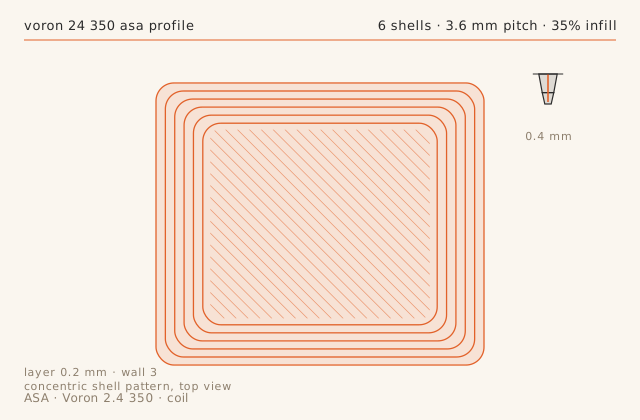
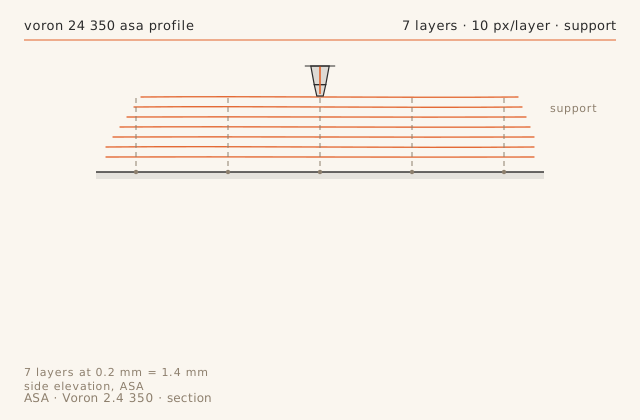
打印记录
- 材料
- ASA
- 喷嘴
- 0.4 mm
- 层高
- 0.2 mm
- 墙数
- 3
- 填充
- 35%
- 打印时长
- 2 小时 23 分
- 发布于
- 2026 年 9 月 18 日
测了什么、留下了什么
这里每个数值都至少是在同一个模型上打两遍才定下来的。喷嘴温度靠拉力测试定而不是靠外观:250 C 的层间强度大约只有 260 C 的 62%,这个差距就是「螺栓孔处开裂」和「不开裂」的差距。腔体温度靠打五个不同腔温下的 150 mm 支架、量角部翘起量来定。
影响最大的两个参数,恰好最常被忽略:腔温和模型冷却。一个能用的 ASA 件和一个废件,差别几乎全在这两项上。
冷却、光泽和强度是同一个旋钮
ASA 冷却从 60% 降到 25%,既解决了表面发灰,拉力测试下层间强度还提高了约 40%。机理很直白:冷风把上一层表面骤冷,骤冷的表面焊不住。低于 15% 时,约 50 度以上的悬垂会变得毛糙,所以这套参数取 25% 而不是 0。
这套参数里第 1 层是 0% 冷却。第 1 层开风扇是直接跟热床附着对着干,而对大平面 ASA 件来说,翘边这场仗就是在第 1 层打完的。
用孔径偏置取代收缩率
这套参数完全关掉切片软件的收缩补偿,改用 +0.20 mm 的孔径偏置。在这台机器上,80 mm 的 ASA 块冷却两小时后实测 79.71 mm,稳定收缩 0.36%;但孔的收缩比例并不相同,因为孔周围材料的约束方式和外壁完全不一样。用统一的百分比,结果是外形对了、孔全偏小。
+0.20 mm 偏置让 M4 过孔落在 4.32 mm,螺栓能用手推过去,装成螺栓连接后又看不出间隙。
这套参数在哪里失效
这是 0.4 mm 喷嘴、11 mm3/s 的参数档。超过约 150 mm/s 之后,熔融需求超出 Dragon HF 在 260 C 下的能力,会出现间歇性欠挤出,看上去像随机的薄斑。要更快,先把喷嘴换成 0.6 mm,再谈提速——瓶颈在熔化区,不在运动系统。
这套参数也依赖封箱,它不是一组可以脱离环境使用的数值。开着门跑,前 40 层的表现会像另一种材料:表面发灰、层间偏脆、150 mm 件的角部会重新开始翘。如果夏天车间温度本来就高,闷腔时间可以缩短,但仍然要等到温度连续三分钟稳定再开打。
失败链出了什么问题、当时怎么处理、最后是什么结果。
-
第几步 01
症状
Surface looked chalky and matte compared with the same filament on the Prusa.
处理
Traced to over-cooling: part cooling was at 60 percent inherited from the PLA profile. Dropped to 25 percent and raised the chamber to 52 C.
结果
Surface gloss matched the reference part; measured interlayer strength up 40 percent.
尺寸复核
- 特征
- 80 mm ASA test block, measured cold after 2 h
- 标称
- 80 mm
- 实测
- 79.71 mm-0.29
- 公差
- ± 0.2 mm
- 备注
- 0.36 percent total shrink, consistent across five repeats. Hole offset of +0.20 mm lands M4 clearance holes at 4.32 mm, which is right for a hand-fit bolt.
参数扫描
| 参数 | 试过 | 选定 | 理由 |
|---|---|---|---|
| Nozzle temperature | 245 / 250 / 255 / 260 / 265 C | 260 C | 250 C gave 62 percent of the interlayer strength of 260 C on a pull test; 265 C started producing stringing across the 30 mm travel gaps. |
| Chamber temperature | 40 / 45 / 50 / 52 / 55 C | 52 C | Below 45 C, 150 mm parts lifted at the corners. Above 54 C the extruder began heat-creeping on prints longer than three hours. |
| Part cooling | 0 / 15 / 25 / 40 / 60 % | 25 % | 0 percent left overhangs ragged above 50 degrees; 40 percent and up measurably weakened tall walls. |
| Pressure advance | 0.030 / 0.038 / 0.045 / 0.052 | 0.045 | Best corner definition on a 20 mm hollow cube; 0.052 started showing gaps at the seam. |
| Brim | none / 5 mm / 8 mm / 10 mm | 8 mm with 0.15 mm gap | 5 mm still lifted on a 150 mm footprint; 10 mm was harder to remove and left a scar line. |
切片档案
# LayerLog ASA profile v3 — Voron 2.4 350, Dragon HF 0.4
# Chamber target 52 C, soak until stable for 3 min
nozzle_temp: 260
nozzle_temp_first_layer: 262
bed_temp: 105
bed_temp_soak: 10 min before print
chamber_temp: 52
part_cooling: 25%
part_cooling_first_layer: 0%
layer_height: 0.20
first_layer_height: 0.28
perimeters: 3
perimeter_speed: 70
infill_speed: 140
solid_infill_speed: 110
travel_speed: 400
accel: 4500
pressure_advance: 0.045
retraction: 0.6 mm at 35 mm/s
max_volumetric_speed: 11 mm3/s
brim: 8 mm, 0.15 mm gap
shrink_compensation: none, hole offset +0.20 mm
沿用下来的做法
- 同样一卷 ASA,260 C 的层间强度比 250 C 高约 60%。
- 25% 模型冷却是可用下限(再低悬垂变差)也是强度上限(再高结合变差)。
- ASA 关掉全局收缩补偿,改用 +0.20 mm 孔径偏置。
- 超过约 150 mm/s 时,瓶颈是热端熔化速率,不是运动系统。
结论
这套参数是这台机器上结构件 ASA 的工作默认值。室温变化超过 5 C 时,需要重新确认闷腔时间。
同一台机器上还有 Voron 2.4 350
-
打印日志
挤出机压臂松了半圈,吃掉 17% 壁厚,却伪装成切片问题
预览里看不出规律、时有时无的欠挤出,几乎从来不是切片问题。这篇是找出它的诊断顺序——量壁厚、量挤出阻力、一次只改一个变量——以及 Clockwork 2 上「太松」和「太紧」之间那条很窄的可用带。
- 材料PLA
- 喷嘴0.4 mm
- 层高0.2 mm
- 打印时长1 小时 36 分
- 失败链2
-
调校档案
Voron 2.4 的 PA6-CF 参数档,以及支配它的两种失效
碳纤尼龙是那种「准备比参数更重要」的材料。这套参数连续跑出了三次干净的三小时打印:285 C、模型冷却 0%、6 mm3/s,机器上常驻干燥箱。文中也写了几乎占全部废件的那两种失效模式。
- 材料PA6-CF
- 喷嘴0.4 mm
- 层高0.25 mm
- 打印时长2 小时 58 分
- 失败链2
-
打印日志
间隙试样:一次 64 分钟的打印量出这台机器的真实公差
每台 FDM 机器都有一个「低于此值就会粘死」的最小间隙,而它不在任何规格书里。这篇打一个六档间隙试样,修正决定答案的那两项切片补偿,最后定下这台 Voron 上可以拿来设计的具体数值。
- 材料PLA
- 喷嘴0.4 mm
- 层高0.2 mm
- 打印时长1 小时 4 分
- 失败链2