Voron 2.4 的 PA6-CF 参数档,以及支配它的两种失效
碳纤尼龙是那种「准备比参数更重要」的材料。这套参数连续跑出了三次干净的三小时打印:285 C、模型冷却 0%、6 mm3/s,机器上常驻干燥箱。文中也写了几乎占全部废件的那两种失效模式。
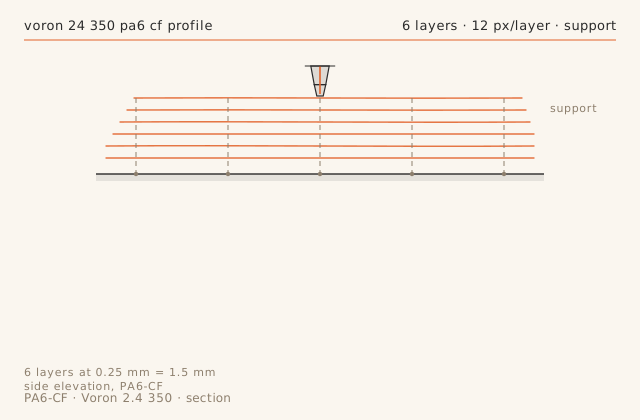
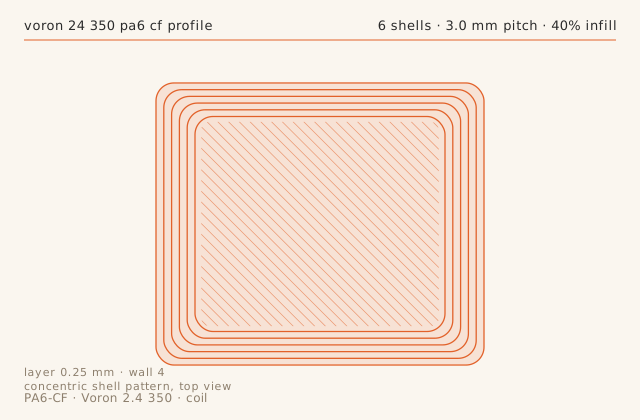
切片图按这条记录自己的切片参数画出来的。
打印记录
- 材料
- PA6-CF
- 喷嘴
- 0.4 mm
- 层高
- 0.25 mm
- 墙数
- 4
- 填充
- 40%
- 打印时长
- 2 小时 58 分
- 发布于
- 2026 年 10 月 8 日
湿度就是全部
表面发灰、层与层之间一掰就断,这是尼龙受潮的特征,不是温度没调对。PA6-CF 吸湿很快:离开干燥箱两天,这个件的层间强度就掉了一半。80 C 烘 8 小时,直接从加热干燥箱里打;开袋一周的料,无论看上去如何都按受潮处理。
没有任何参数能补偿湿度。如果表面发灰,就停下来烘干,而不是升温——受潮尼龙升温会在壁内产生蒸汽气泡。
完全不使用模型冷却
这套参数模型冷却是 0%。尼龙需要缓慢而高温的层间焊接,风扇会把上一层表面吹冷,下一层就焊不上去。测试中冷却超过 10%,4 mm 壁就会稳定分层。代价是约 45 度以上的悬垂会比较毛糙;遇到这种结构,要么改摆放方向,要么接受毛糙。
55 C 的腔体在做别的材料上风扇做的事:降低冷却速率,让件在不吹风的情况下保持尺寸稳定。
磨蚀性材料的维护账单
碳纤会磨喷嘴。这台机器上,前 500 克 PA6-CF 就把喷嘴孔磨大,壁厚从 1.05 mm 掉到 1.00 mm,这也是参数档取 97% 流量而不是 100% 的原因。黄铜喷嘴在这种材料下几百克就报废;硬化钢或红宝石不是可选项。
每消耗 250 克碳纤料,重测一次 20 mm 标定壁。当壁厚比上次读数薄超过 0.05 mm,换喷嘴并重跑流量测试,而不是继续往上加流量值。
长熔程下回抽就是堵头风险
在没有 bowden、熔程又长的直驱结构上,1.5 mm 回抽会把熔融的 PA6-CF 拉进冷区凝固。一次打印堵两次,最后靠把回抽降到 1.2 mm、行程速度从 500 降到 300 mm/s 解决。尼龙拉丝,本能反应是加大回抽——在又热又长的熔程上,这个本能恰恰是错的。
接受一定拉丝,用去毛刺刀修掉就好。带几根丝的好件,比打到一半半堵的件有价值得多。如果某个结构实在不能容忍拉丝,就改摆放方向,让行程发生在零件内部而不是外表面,这比继续调回抽有效。
失败链出了什么问题、当时怎么处理、最后是什么结果。
-
第几步 01
症状
Surface was matt and the part snapped along a layer line when flexed.
处理
Filament had absorbed moisture — it had been out of the dry box for two days. Re-dried 8 hours at 80 C, printed straight from a heated dry box.
结果
Surface went glossy and layer strength roughly doubled. The same part now bends instead of snapping.
-
第几步 02
症状
Nozzle clogged 40 minutes into a 3-hour print, twice.
处理
Retraction was 1.5 mm, which pulled molten PA6-CF up into the cold zone where it solidified. Reduced to 1.2 mm and lowered the travel speed from 500 to 300 mm/s.
结果
Three consecutive 3-hour prints with no clog and no partial blockage.
尺寸复核
- 特征
- 60 mm PA6-CF bracket, measured dry after 24 h
- 标称
- 60 mm
- 实测
- 59.78 mm-0.22
- 公差
- ± 0.1 mm
- 备注
- 0.37 percent shrink, stable across three repeats. Nylon absorbs moisture and grows about 0.2 percent if left out for a week, so this measurement is only valid on a dry part.
参数扫描
| 参数 | 试过 | 选定 | 理由 |
|---|---|---|---|
| Nozzle temperature | 270 / 275 / 280 / 285 / 290 C | 285 C | Below 280 C the surface was matt and brittle at the layer lines. 290 C gave 15 percent better layer strength but the stringing was unmanageable on a 60 mm part. |
| Flow | 94 / 96 / 97 / 99 / 101 % | 97 % | PA6-CF is abrasive and the effective orifice wears; 97 percent held the wall thickness at 1.03 mm on a 1.05 mm target across a full spool. |
| Part cooling | 0 / 10 / 25 / 50 % | 0 % | Any cooling above 10 percent caused delamination on 4 mm walls. Nylon relies on slow cooling for interlayer welding. |
| Perimeter speed | 30 / 40 / 45 / 60 mm/s | 45 mm/s | The 6 mm3/s volumetric ceiling binds at about 50 mm/s with a 0.4 mm nozzle; 45 leaves headroom for acceleration. |
| Retraction | 0.6 / 0.8 / 1.2 / 1.5 mm | 1.2 mm | Below 1.0 mm the part had web strings on every travel; above 1.4 mm the nozzle clogged twice in one print from heat-creeped material being dragged back. |
切片档案
# LayerLog PA6-CF profile v2 — Voron 2.4 350, hardened 0.4 nozzle
# Filament must be dried 8 h at 80 C and printed from a dry box
nozzle_temp: 285
nozzle_temp_first_layer: 288
bed_temp: 100
chamber_temp: 55
part_cooling: 0%
layer_height: 0.25
first_layer_height: 0.30
perimeters: 4
perimeter_speed: 45
infill_speed: 90
solid_infill_speed: 70
travel_speed: 300
accel: 3000
pressure_advance: 0.058
retraction: 1.2 mm at 25 mm/s
max_volumetric_speed: 6 mm3/s
flow: 97%
brim: 8 mm
nozzle_material: hardened steel or ruby, brass will be destroyed
沿用下来的做法
- PA6-CF 要 80 C 烘 8 小时并从干燥箱里打;受潮会让层间强度减半。
- 模型冷却取 0%;超过 10% 会让 4 mm 壁分层。
- 碳纤磨损喷嘴,所以流量值取 97%,并且每 250 克复测一次。
- 长熔程下回抽不超过 1.2 mm,否则会堵头。
结论
这套参数在这台机器上用于结构支架是可靠的。它也是本站维护成本最高的参数档:每 250 克检查一次喷嘴不是可选项。
同一台机器上还有 Voron 2.4 350
-
打印日志
挤出机压臂松了半圈,吃掉 17% 壁厚,却伪装成切片问题
预览里看不出规律、时有时无的欠挤出,几乎从来不是切片问题。这篇是找出它的诊断顺序——量壁厚、量挤出阻力、一次只改一个变量——以及 Clockwork 2 上「太松」和「太紧」之间那条很窄的可用带。
- 材料PLA
- 喷嘴0.4 mm
- 层高0.2 mm
- 打印时长1 小时 36 分
- 失败链2
-
打印日志
间隙试样:一次 64 分钟的打印量出这台机器的真实公差
每台 FDM 机器都有一个「低于此值就会粘死」的最小间隙,而它不在任何规格书里。这篇打一个六档间隙试样,修正决定答案的那两项切片补偿,最后定下这台 Voron 上可以拿来设计的具体数值。
- 材料PLA
- 喷嘴0.4 mm
- 层高0.2 mm
- 打印时长1 小时 4 分
- 失败链2
-
打印日志
0.6 mm 喷嘴配 0.4 mm 层高:花瓶模式真正的代价
Voron 换上 0.6 mm 喷嘴,96 mm 花瓶从三小时多缩到 87 分钟,但失效模式也跟着变了。这篇记录长熔程喷嘴跑高体积流量时的接缝问题,以及模型上唯一一处必须单独处理冷却的区段。
- 材料PETG
- 喷嘴0.6 mm
- 层高0.4 mm
- 打印时长1 小时 27 分
- 失败链2