KE 原装挤出机打 TPU 95A:3 小时 44 分,以及唯一那个拱起的位置
KE 的 Sprite 挤出机是直驱,这让柔性料「可行」而不是「容易」。这套参数围绕一个机器真能扛住的 3.0 mm3/s 上限来搭,并写清每次失败都失败在同一个位置。
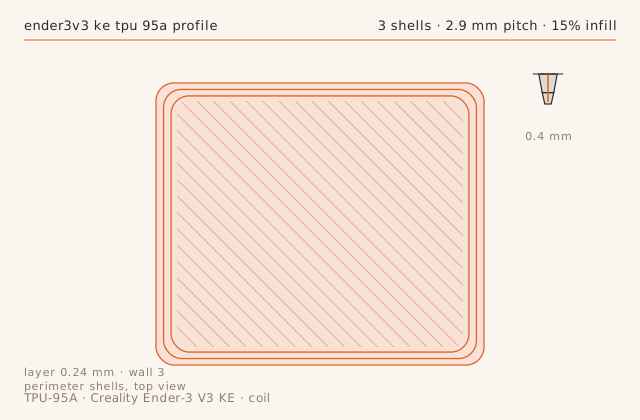
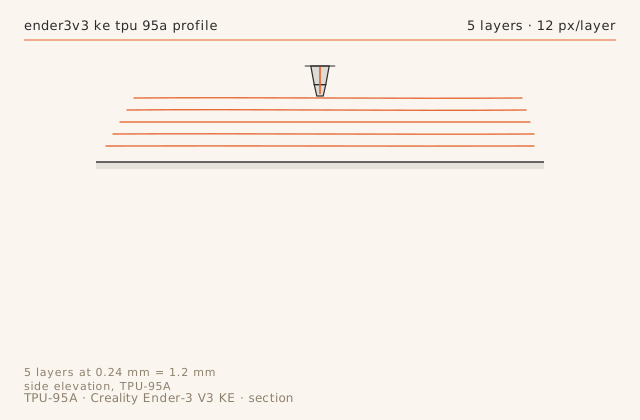
切片图按这条记录自己的切片参数画出来的。
打印记录
- 材料
- TPU-95A
- 喷嘴
- 0.4 mm
- 层高
- 0.24 mm
- 墙数
- 3
- 填充
- 15%
- 打印时长
- 3 小时 44 分
- 发布于
- 2026 年 10 月 2 日
只有一个失效点,而且每次都在同一处
这台机器上每一次失败的 TPU 打印,拱起的位置都一样:送料齿轮和熔化区顶部之间、喷嘴上方约 25 mm 处。这个位置说明问题是背压而不是夹持——夹持失效会发生在齿轮处。解法永远是降体积流量,不是调松压臂。
4.5 mm3/s 时这台挤出机稳定在 90 分钟左右拱起;3.0 mm3/s 下连续跑了 3 小时 44 分没卡。在熔程较长的直驱机器上,3 mm3/s 已经接近 95A 的诚实上限。
柔性料要把 Z 抬升关掉
所有标准参数档都在行程时抬 Z,而在 TPU 上这弊大于利。熔化区里是软料,抬起喷嘴等于每次移动都拉出一根细丝,而这些丝又长又难清。关掉抬升之后,顶面会留下小的喷嘴压痕,指甲一刮就掉。
例外是那种又高又细、会被喷嘴撞倒的特征。这种情况下保留抬升、接受拉丝,因为撞倒一个特征废掉的时间比清丝多得多。判断标准很简单:特征高度超过 20 mm 且壁厚低于 2 mm,就保留抬升。
刻意过挤出,但别过头
TPU 出喷嘴后会回弹,所以 1.00 倍率打出的壁比切片软件预期的更薄,外壁相接处会留缝。这台机器上 1.05 能完全闭住顶面,1.08 则在外壁上出现可见凸点。可用窗口很窄——大约 0.05 的倍率范围——所以要以 0.02 为步长改。
35% 模型冷却夹在两种失效之间:低于 25% 悬垂会塌,高于 45% 时 3 mm 壁的层间结合用手就能撕开。
量柔性件不要夹紧
卡尺用力夹住 TPU 件读数会比轻触测量小约 0.5 mm。这篇里 30 mm 的底脚,轻触测量是 29.44 mm,夹紧是 29.9 mm。两个数都没错,它们是对一个柔性物体的不同测量方式。
选定一种方式、写下来、所有柔性件都用它。混着用,1.9% 的收缩就会变成 0.3%,然后你会花一周去找那个差别。
失败链出了什么问题、当时怎么处理、最后是什么结果。
-
第几步 01
症状
Filament buckled above the extruder gears 90 minutes into the first attempt.
处理
Volumetric ceiling was 4.5 mm3/s. Reduced to 3.0 mm3/s and reduced the perimeter speed from 35 to 22 mm/s to match.
结果
Completed. Total time rose from an estimated 2 h 40 to 3 h 44, which is the honest cost on this machine.
-
第几步 02
症状
Blobs on the outer wall and a lumpy top surface.
处理
Multiplier at 1.08 was too high. Reduced to 1.05 and turned Z-hop off, since the hop was stretching threads on every travel.
结果
Wall is smooth and the top surface is closed. Small nozzle marks on the top surface remain, removable with a fingernail.
尺寸复核
- 特征
- TPU foot, 30 mm base
- 标称
- 30 mm
- 实测
- 29.44 mm-0.56
- 公差
- ± 0.25 mm
- 备注
- 1.9 percent undersize on a flexible part is expected. Measuring with light caliper pressure, not clamped, is the difference between 29.44 and 29.9 mm.
参数扫描
| 参数 | 试过 | 选定 | 理由 |
|---|---|---|---|
| Volumetric speed | 2.0 / 2.5 / 3.0 / 4.5 mm3/s | 3.0 mm3/s | At 4.5 the filament buckled between the gears and the melt zone on a 224-minute print. 2.0 doubled the time for no visible improvement. |
| Extrusion multiplier | 1.00 / 1.03 / 1.05 / 1.08 | 1.05 | Below 1.03 the top surface had gaps between perimeters; 1.08 produced visible blobs on the outer wall. |
| Z-hop | on / off | off | With a hop the flexible material stretched a thin thread on every travel. Without it, the nozzle left small marks on the top surface that were easier to remove than the strings. |
| Retraction | 0.2 / 0.4 / 0.8 mm | 0.4 mm | 0.8 mm pulled the soft filament out of the drive gears and caused a stall; 0.2 mm left a tail on every move. |
| Part cooling | 20 / 35 / 55 % | 35 % | Below 25 percent the overhangs sagged; above 45 percent the layer bonds on a 3 mm wall were weak enough to tear. |
切片档案
# LayerLog TPU 95A profile v1 — Creality Ender-3 V3 KE, stock Sprite extruder
# Direct drive, but the melt zone is long; keep the volumetric ceiling low
nozzle_temp: 230
nozzle_temp_first_layer: 232
bed_temp: 45
layer_height: 0.24
first_layer_height: 0.30
perimeters: 3
perimeter_speed: 22
infill_speed: 35
solid_infill_speed: 28
travel_speed: 150
accel: 800
pressure_advance: 0.070
retraction: 0.4 mm at 12 mm/s, wipe on
max_volumetric_speed: 3.0 mm3/s
extrusion_multiplier: 1.05
part_cooling: 35%
no_z_hop: true
沿用下来的做法
- TPU 拱起永远发生在齿轮与熔化区之间;要降体积流量,不是调压臂。
- 这台挤出机上 95A 的诚实上限是 3.0 mm3/s;4.5 mm3/s 大约 90 分钟就失败。
- 柔性料关掉 Z 抬升;它拉出的丝比它避免的压痕更麻烦。
- 量 TPU 件用轻触法,并且每次都固定用同一种。
结论
KE 上 TPU 95A 在 3.0 mm3/s 下可稳定复现。小件要 3 小时 44 分,它仍然是批量材料。
同一台机器上还有 Creality Ender-3 V3 KE
-
打印日志
给 KE 换高流量热端:22 mm3/s,以及必须重新推导的压力提前量
换高流量热端把 KE 的体积流量上限从约 11 提到 22 mm3/s,典型件从 108 分钟缩到 67 分钟。代价是它让此前所有压力提前量数值全部失效,这篇大半时间讲的就是这件事。
- 材料PLA
- 喷嘴0.4 mm
- 层高0.2 mm
- 打印时长1 小时 7 分
- 失败链2
-
打印日志
KE 的 Z 向横纹:先是 8 mm 周期,然后是 2 mm 周期,两种不同的解法
Z 向横纹是有周期的,而周期在你动手之前就能告诉你原因。这篇处理同一台机器上的两种横纹——一种对应丝杠旋转周期、一种对应螺纹螺距——并说明为什么前者必须机械修,后者只能软件补。
- 材料PLA
- 喷嘴0.4 mm
- 层高0.2 mm
- 打印时长58 分钟
- 失败链2
-
打印日志
给 KE 的热床加垫片:0.15 mm 网格误差,补偿盖不住
自动调平有极限,在 0.28 mm 首层上这个极限大约是 0.08 mm。这篇记录一台前左角低 0.15 mm 的 KE、用来机械修正它的垫片,以及证明修好了的九点首层测试。
- 材料PLA
- 喷嘴0.4 mm
- 层高0.28 mm
- 打印时长41 分钟
- 失败链2