Every log about one printer, in one place.
Original Prusa MK4
The reference machine. When a filament behaves strangely, it gets printed here first because this is the one whose history is fully recorded.
- Motion
- Bedslinger (i3)
- Build volume
- 250 x 210 x 220 mm
- Hotend
- Nextruder, 0.4 nozzle
- Enclosure
- Open, cardboard enclosure added for ASA
6 entries published2026
-
Print log
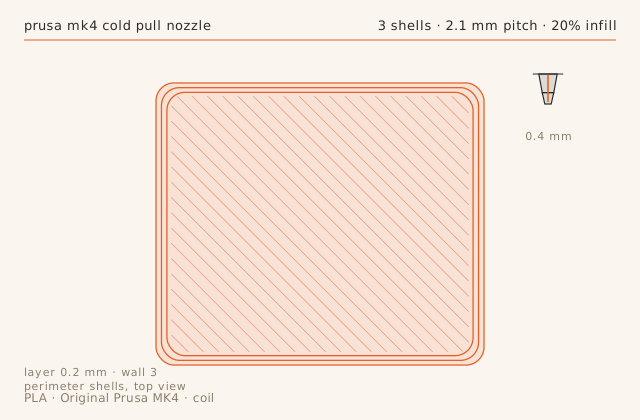
Cold pulls on a Nextruder: three pulls, and the pitting that looked like under-extrusion
Surface pitting with correct wall dimensions is not a flow problem, it is contamination. This log covers the cold pull procedure that works on a MK4's Nextruder nozzle, why the temperature matters more than the method, and the purging step after it that most people skip.
- MaterialPLA
- Nozzle0.4 mm
- Layer height0.2 mm
- Print time1 h 1 min
- Failure chain2
-
Print log
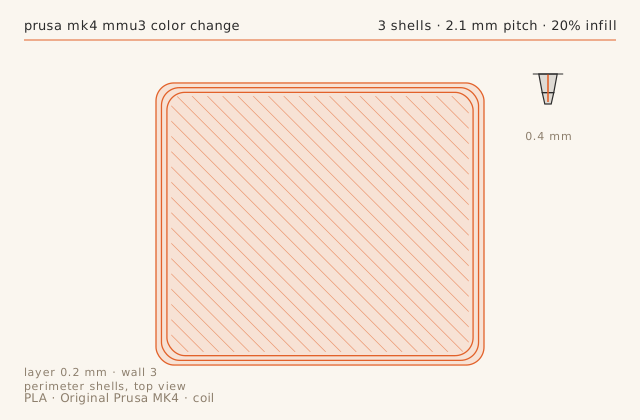
MMU3 colour changes: purge volume matters more than anything else in the profile
Multi-colour printing on the MK4 fails in two ways — dirty transitions and dragged strings — and both are purge and ramming problems rather than model or slicer problems. This log covers a 13-change 60 mm plaque, the purge volume that finally produced clean boundaries, and the 9 seconds each ramming cycle costs.
- MaterialPLA
- Nozzle0.4 mm
- Layer height0.2 mm
- Print time3 h 56 min
- Failure chain2
-
Print log
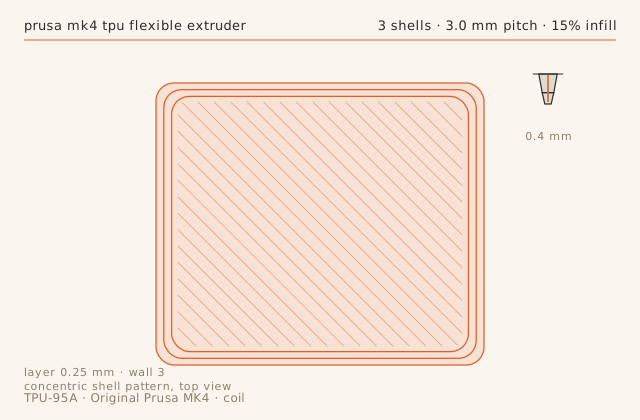
TPU 95A on a direct-drive MK4: 3 hours 25 minutes for a part that takes 50 in PLA
Flexible filament on a direct-drive printer is not hard, it is slow, and the failure mode is always the same — the filament buckles between the gears and the melt zone. This log covers the two settings that prevent it, why flexible parts need deliberate over-extrusion, and how long it really takes.
- MaterialTPU-95A
- Nozzle0.4 mm
- Layer height0.25 mm
- Print time3 h 25 min
- Failure chain2
-
Print log
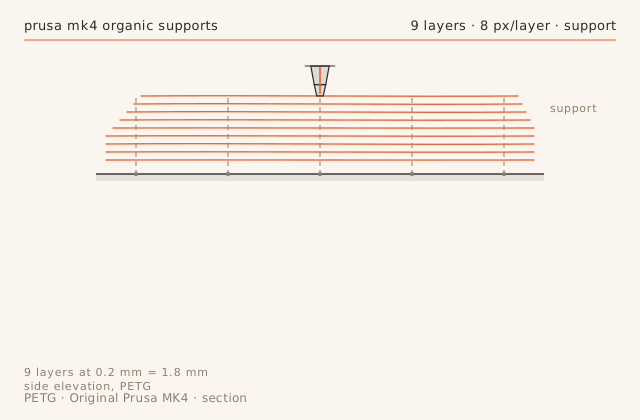
Organic supports on the MK4: the z-gap that works for PETG is not the one that works for PLA
Tree supports look like a solved problem until the material changes. PETG welds to itself across a 0.15 mm gap, so the standard PLA clearance fuses the support to the part. This log covers the gap and interface settings that make PETG supports break away by hand, and the stability fix that stopped a tall tree from falling over.
- MaterialPETG
- Nozzle0.4 mm
- Layer height0.2 mm
- Print time2 h 52 min
- Failure chain2
-
Tune profile
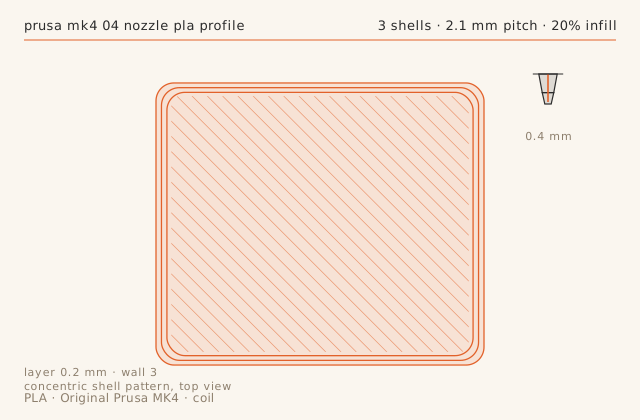
A PLA profile for the MK4 that is tuned on measurements, not on appearance
The MK4 prints PLA well out of the box, which makes it easy to skip calibration entirely and then wonder why one spool behaves differently from the next. This profile is built from five measured test matrices, including the extrusion multiplier that most people never check because the default is close enough.
- MaterialPLA
- Nozzle0.4 mm
- Layer height0.2 mm
- Print time1 h 24 min
- Failure chain1
-
Print log
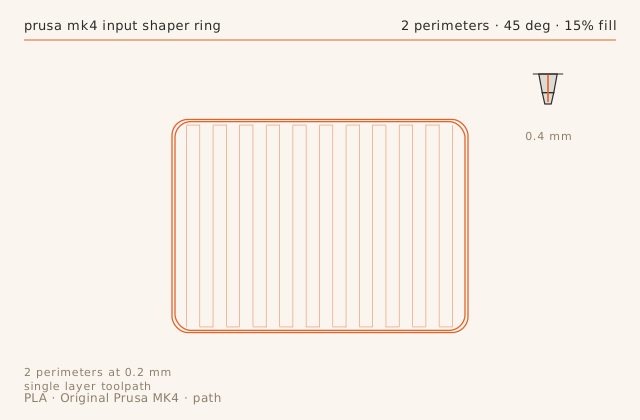
MK4 ringing tower: input shaper did most of the work, pressure advance did the rest
The MK4 ships with input shaper enabled, so the useful question is not whether to turn it on but when to recalibrate. This log covers a stock 60 mm tower, the two independent surface problems on it, and the measured difference between a shaper tuned on one bench and the same machine on another.
- MaterialPLA
- Nozzle0.4 mm
- Layer height0.2 mm
- Print time47 min
- Failure chain2